January Slump? 5 Ways to Reignite Your Motivation
January is supposed to feel like a fresh start. A new year, a clean slate, and that quiet promise that this is the moment everything begins to fall into place.
But for many of us, January feels very different. The festive period ends, routines are disrupted, the weather is darker and colder (we’re in the UK!) and suddenly there’s an unspoken pressure to be motivated, productive, and ready to go straight away. When that energy doesn’t show up, it’s easy to feel frustrated with yourself or wonder what you’re doing wrong. Even as we approach the end of January, it can be tough if the motivation still hasn’t quite kicked in yet.
If you’re feeling stuck, flat, or unmotivated right now, it doesn’t mean you’ve failed before the year has fully begun. It usually means you’re tired, overloaded, or trying to move forward without enough clarity or support.
The good news is that motivation isn’t something you have to force. It can be gently rebuilt by creating structure where things feel messy and introducing habits that support you, rather than drain you. Below are five ways to help reignite your motivation in January, without burning yourself out.
Why the January slump is so common
The January slump isn’t random, and it isn’t a personal flaw.
December often takes more out of us than we realise. Between social commitments, end-of-year pressure, disrupted routines, and not doing as much as we had intended over the last year, many people enter January already running on empty. At the same time, January is framed as the month where everything should reset instantly - habits, goals, routines, and mindset included.
Add shorter days, less natural light, and colder weather into the mix, and it’s no surprise that motivation feels harder to access. And what often gets labelled as laziness is actually mental overload. Too many intentions, too much pressure, and not enough space to ease back into things. Motivation tends to return when life feels clearer, not when we push ourselves harder.
Understanding this matters, because it allows you to handle January and the coming months with compassion rather than self-criticism.
1. Create motivation by systemising your thoughts and plans
One of the biggest motivation blockers in January is carrying too much in your head.
When goals, to-do lists, ideas, and worries are all living there at once, it becomes difficult to focus or take action and you may find yourself constantly thinking about what you should be doing without actually doing it. This can lead to procrastination, overwhelm, and that persistent feeling of being behind, even when you’re trying your best.
Systemising your planning helps remove that mental load.
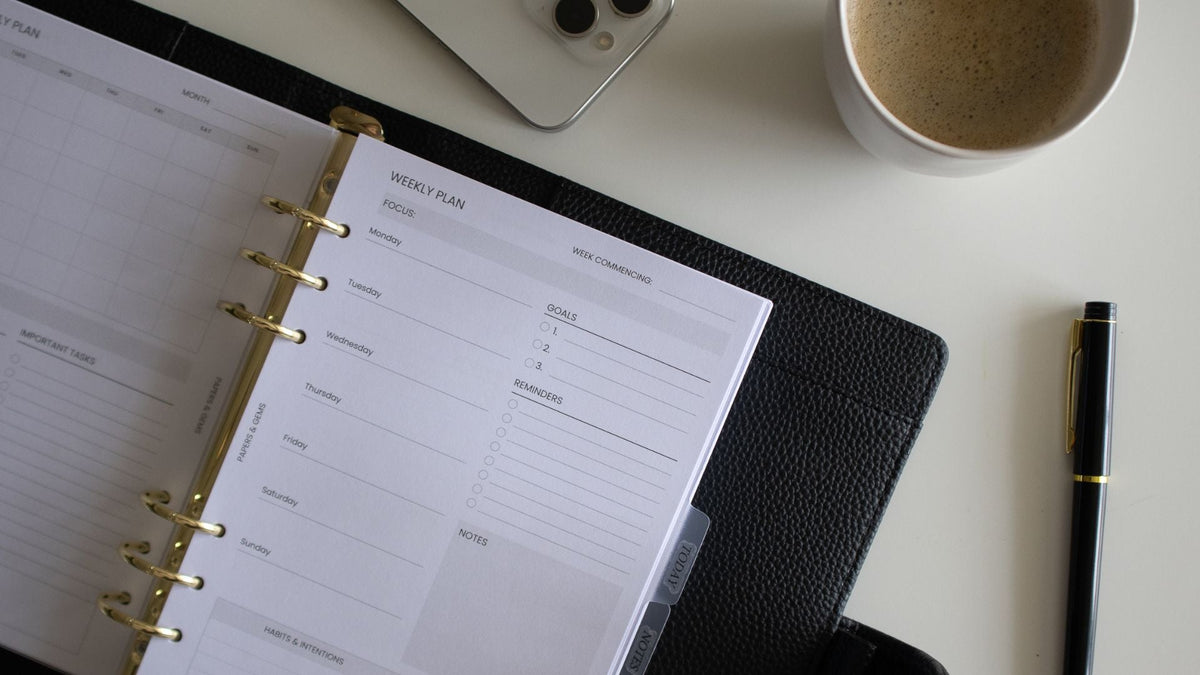
Instead of holding everything all at once, you give your thoughts some structure. Writing things down allows your brain to rest, because it no longer has to remember, organise, and prioritise everything all at the same time - we’re not robots. There’s a noticeable shift when plans move out of your head and onto paper, things feel calmer, clearer, and more manageable.
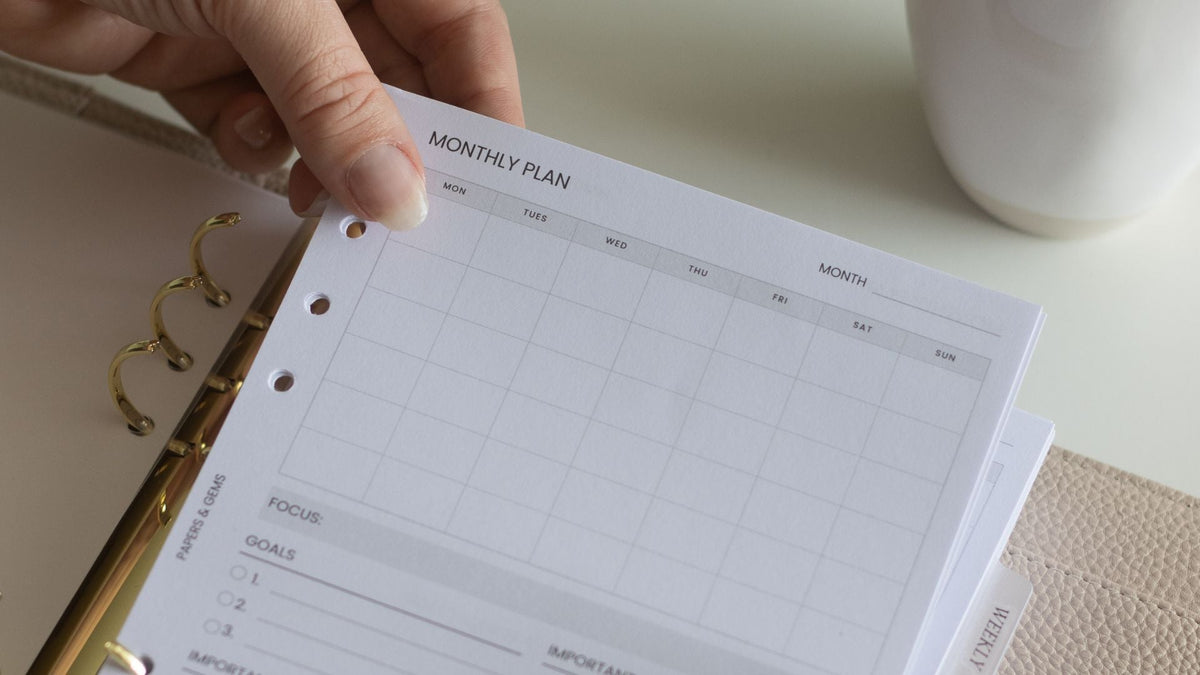
But this doesn’t need to mean strict schedules or packed-to-the-minute days. In January especially, flexibility matters. Having one place where your goals, priorities, and notes live can be enough to help you feel grounded again.
When your plans feel organised and realistic, starting no longer feels so heavy. And when starting feels easier, motivation has room to return naturally.
2. Stop waiting for motivation and start with one clear action
It’s easy to believe that motivation has to come first. That once you feel inspired or energised, everything else will follow.
In reality, motivation often shows up after you’ve already started. It kicks in when a spark ignites, you feel inspired or when the momentum starts to build.
Waiting to feel motivated can keep you stuck, particularly when energy levels are lower and routines are still settling. Instead of asking how to feel more motivated, it can be far more helpful to ask what small, useful action you can take today.
Small actions reduce resistance and help to remove the pressure to do everything at once and replace it with gentle momentum. That might look like:
- Writing down one priority for the day instead of a long to-do list
- Planning the week rather than trying to map out the entire year.
- Sitting down with your planner for five minutes, without aiming for perfection
These actions might feel simple, but they matter more than you think. Each small step creates a sense of progress, which builds confidence and trust in your ability to move forward, even on low-energy days.
Motivation doesn’t come from waiting for the right mood. It comes from beginning where you are.
3. Build gentle habits that support your energy
January has a habit of encouraging extremes. Big routines, early mornings, strict habits, and all-or-nothing challenges that feel inspiring at first but quickly become exhausting.
The problem isn’t habits themselves, it’s how much pressure we attach to them.
Habits work best when they feel supportive rather than demanding. Especially in winter, gentle habits that fit into your existing life are far more sustainable than ambitious routines that require constant discipline and a massive overhaul.
Gratitude journaling is a good example of this. It doesn’t ask you to overhaul your mindset or feel positive all the time. Instead, it creates a small pause in your day where you notice what’s already there. This could be as simple as writing down one thing you’re grateful for, reflecting on something that went well, or acknowledging progress even on days that felt slow or unproductive.
During January, when it’s easy to focus on what you haven’t done yet, gratitude journaling helps rebalance your perspective. It gently shifts attention away from pressure and towards progress, which can be surprisingly motivating.
Over time, this kind of habit builds emotional steadiness and self-trust. It reminds you that you’re moving forward, even when things feel quiet.
4. Reset your environment before resetting yourself
Your environment has a bigger impact on your motivation than you might realise.
When your space feels cluttered or chaotic, your mind often follows. Even simple tasks can feel overwhelming if your surroundings are adding to your mental load. The idea here isn’t to overhaul everything, but to make small changes that create a sense of calm.
A gentle reset might include clearing one surface, tidying your desk, or organising your planning and journaling tools so they’re easy to reach, allowing you to get started without overthinking it. These small actions send a subtle signal to your brain that it’s safe to slow down and begin.
Creating a simple ritual around planning or reflection can also help. Sitting down with a notebook and a cup of tea, even for a few minutes, can turn something that feels like a chore into a moment of pause.
When your environment supports you, routines become easier to keep. Motivation grows when starting feels inviting rather than overwhelming.
5. Build motivation through reflection, not comparison
January is full of comparison, especially online. It can feel like everyone else is already clear, focused, and ahead, while you’re still finding your footing.
Comparison drains motivation because it shifts attention away from what you need and places it on where you think you should be. Reflection does the opposite.
Taking time to reflect helps you reconnect with your own pace, priorities, and energy. Instead of asking whether you’re doing enough, you start asking what actually supports you.
Helpful reflection questions might include:
- What’s already working for me right now?
- What did I find draining last year that I don’t want to repeat?
- What would make this month feel calmer or more supportive?
"When reflection is paired with planning, it becomes even more powerful. Planning gives direction, while reflection helps you adjust without judgment. Together, they create motivation that’s rooted in self-awareness rather than pressure."
How to move forward without burning out
January doesn’t need to be intense to be meaningful. Motivation grows when life feels manageable and aligned with your energy. Instead of trying to change everything at once, focus on building a foundation that supports you.
That might mean choosing one planning system that helps you feel organised and one gentle habit, like gratitude journaling, that helps you feel grounded. Small, intentional choices create momentum without overwhelm.
January isn’t a test of discipline or productivity. It’s a transition. When you allow yourself to move forward calmly and intentionally, motivation has space to return, quietly and sustainably, in its own time.
Papers & Gems stationery is designed to support you
When I was designing products such as the Papers & Gems planner and the Gratitude Journal, I created them around this very idea - that you can create calm moments (at any point in the year) that support your productivity. Because it’s more than a planner, or a journal or a notebook - it’s a structure that helps you bring calm clarity into your life.
I've noted a couple of products that you might like below. I hope you enjoy!
OUR RECOMMENDATIONS
Get blog post updates delivered straight to your inbox - join our email newsletter.