Article: How to Build a Planning System That Actually Works: The Binder Method
How to Build a Planning System That Actually Works: The Binder Method
If you've ever bought a beautiful planner in January only to abandon it by March, you're not alone. The problem usually isn't you, it's the system.
A binder planner is a customisable ring-binder planning system made up of interchangeable inserts, dividers, and accessories. Unlike a traditional planner, nothing is fixed - you choose exactly what goes inside and can adapt it as your needs change.
There's a better way to plan, and it starts with understanding why most planners fail in the first place. In this post, we'll walk you through the binder method: a flexible, customisable approach to planning that adapts to your life rather than the other way around. By the end, you'll know exactly how to build a planning system that you'll actually stick to and want to use.
Why Most Planning Systems Fail
Browse any stationery stores in January and you'll find rows of beautiful planners with structured layouts, pre-printed dates, motivational quotes on every other page. They're designed to appeal to the version of yourself that has everything together.
The trouble is, most of us don't live like that. Life shifts, a busy season arrives, a new project takes over and priorities change. And the moment your life stops fitting the planner's format, the planner stops working.
This is the "one-size-fits-all" problem. Traditional planners are designed for an average schedule, which means they're a perfect fit for almost nobody. A weekly layout that works beautifully in a quiet month becomes frustrating when things get busy. A daily format that suits a structured nine-to-five feels suffocating when your days are unpredictable. The planner doesn't adapt, so you stop using it.
Then there's the fresh start trap. A new planner feels like a new beginning, so we buy another one, full of optimism, only to find ourselves in the same situation a few months later. The format is still rigid. The problem hasn't changed. And gradually, the guilt of another abandoned planner starts to outweigh the motivation that came with buying it.
It's also worth noting that many people turn to digital tools to try and solve this, and apps and calendars certainly have their place (I use them as part of my big picture planning system). But screens come with notifications, open tabs, and the constant pull of other things. Sometimes, putting pen to paper and stepping away from the screen is the clearest way to think and there’s something about the physical act of writing that helps ideas settle and priorities become clear.
The binder method offers something different: a planning system that's built around your life, not someone else's idea of it.
What Is a Binder Planner System?
A binder planner is a fully customisable planning system built around a ring binder and interchangeable inserts. Rather than being locked into a pre-printed format, you choose exactly what goes inside, and you can change it whenever your needs evolve.
The four core components are:
A binder - your foundation. This is the piece you'll keep long-term, so it's worth choosing one you genuinely love. They come in lots of formats, but an A5 6-ring binder is a common format.
Inserts - the pages that do the planning work. Daily, weekly, monthly, habit trackers, project pages - you choose what you need.
Dividers - to separate your sections and keep everything easy to navigate.
Accessories - pen loops, sticky note pockets, dashboards. The details that make it feel personal and bring joy to building out your planner.
Remember, nothing has to be permanent. Swap out inserts as your needs change, add a new section for a new project, remove what isn't serving you. Your planner grows with you, which is exactly what a good planning system should do.
How to Choose Your Binder
Your binder is the foundation of the whole system, so it's worth taking a moment to choose well.
Size is the first consideration. Binders come in lots of sizes and colour options, but an A5 Ring Binder is the most popular everyday choice: portable enough to carry with you, but spacious enough to write comfortably. If you plan mostly at your desk, you might prefer something larger like an A5 instead of A6. If you're always on the go, a more compact size could suit you better.
Cover material matters more than you might think. A binder you love looking at is a binder you'll actually use. Look for something durable and tactile, a cover that feels considered rather than purely functional. Leather and vegan leather options tend to wear beautifully over time and develop a character that a plastic cover simply won't.
Ring mechanism is a practical but important detail. A smooth, secure ring mechanism makes it easy to add, remove, and turn pages without frustration. It's one of those things you only notice when it's not working well, so it's worth paying attention to before you buy.
Take a look at our A5 Gold 6-Ring Binder.
What Inserts Do You Need for a Binder Planner?
Inserts are where your system really takes shape and the key is to match them to how you actually plan, not how you think you should plan. Here are some suggestions:
Daily inserts work well if you have a packed schedule and need hour-by-hour structure. They give you a clear view of each day and space to capture tasks, appointments, and notes as they come. If you find yourself frequently losing track of what needs to happen and when, a daily insert can bring real clarity.
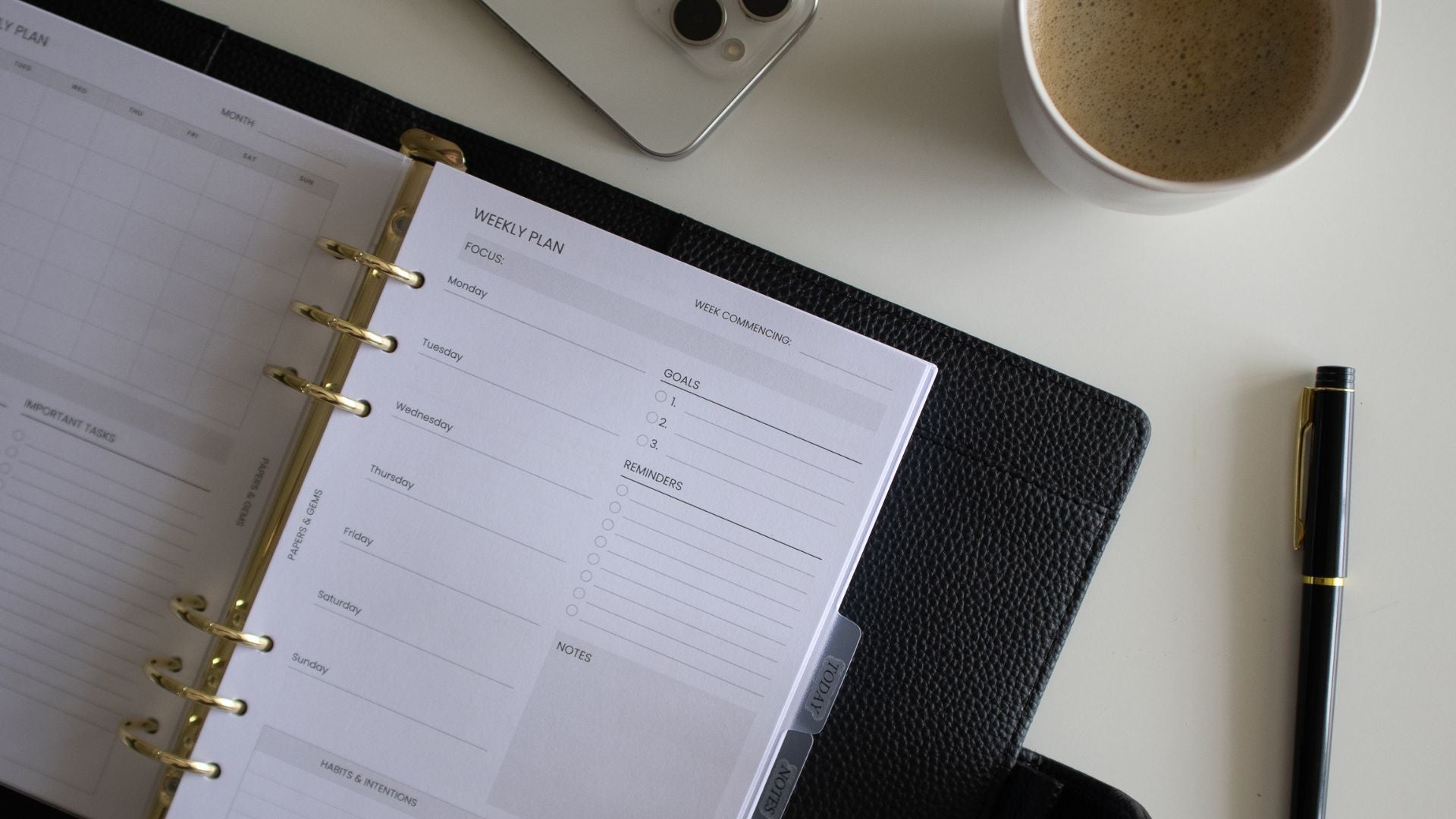
Weekly inserts are ideal for an overview of the week ahead. They're great for tracking priorities, deadlines, and recurring tasks without getting lost in the detail of every hour. Many people find a weekly layout gives them just enough structure to feel in control without feeling constrained.
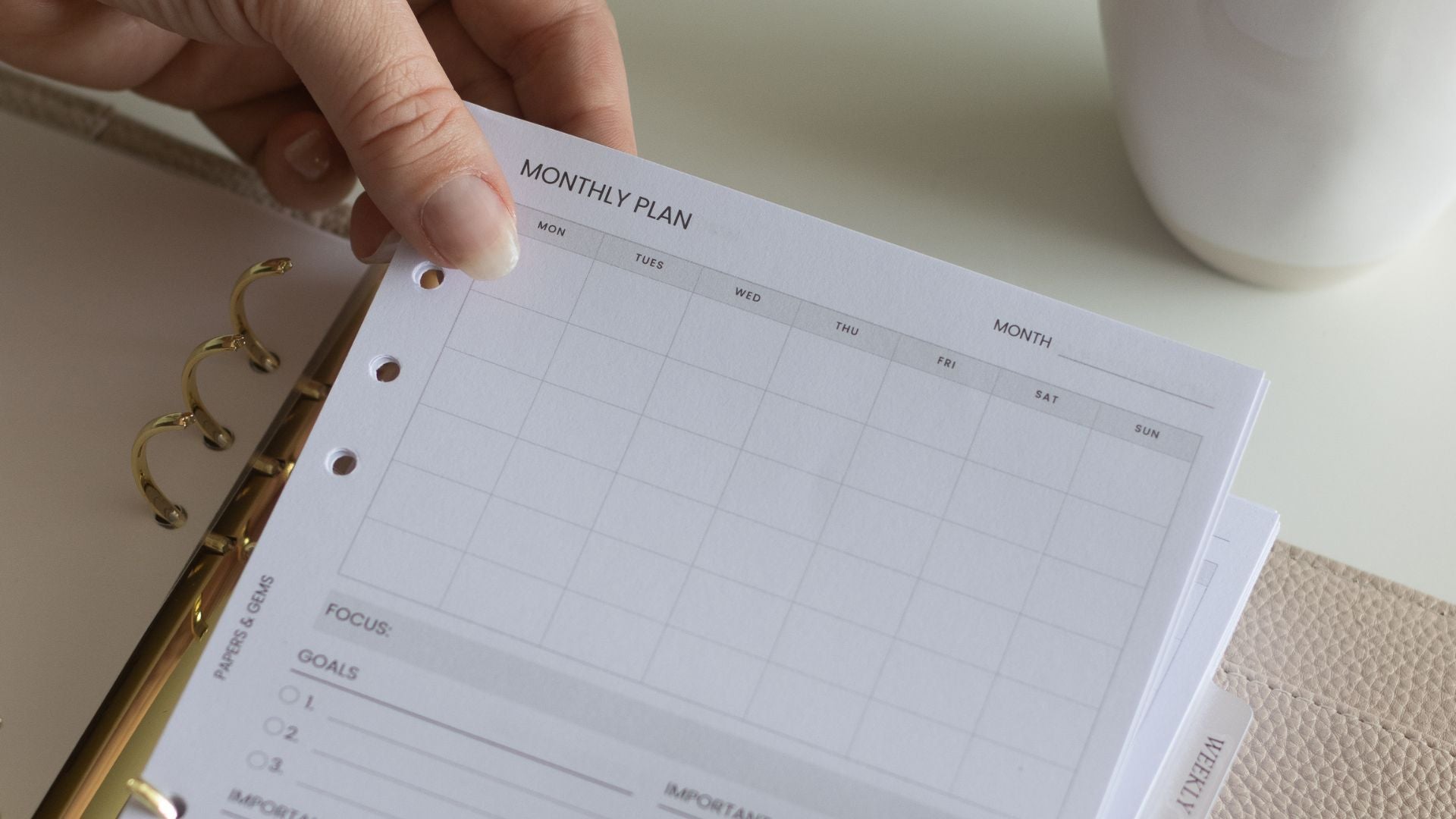
Monthly inserts give you the big picture: deadlines, appointments, goals, and anything else you need to see at a glance across the whole month. They're particularly useful for spotting busy periods in advance and making sure nothing important slips through.
You don't have to choose just one format, many people use a combination, for example: a monthly overview at the front, weekly pages behind it, and daily pages for particularly busy periods. The beauty of the binder system is that you can layer these formats in whatever way makes sense for you. Start with what feels most natural and build from there.
Take a look at our A5 Inserts.
How to Set Up Your Sections
Dividers turn a collection of pages into a navigable system. Without them, even the best inserts can feel overwhelming. With them, everything has a place and you can move through your planner with so much more ease.
Remember, there's no single right way to organise your sections. Common approaches include: this month, projects, notes, personal, and finances. But your sections should reflect the areas of your life you actually need to track, not a template someone else has designed.
Think about where your attention goes most during the week. If you're juggling multiple work projects, a dedicated projects section with its own divider will save you time every day. If you're working towards a personal goal, giving it its own space signals that it matters. The act of setting up your sections is itself a useful exercise in understanding your own priorities.
Start simple. Two or three sections is enough to begin with. You can always add more as you get a feel for how you use the system.
Take a look at our A5 Dividers, stickers and dashboards to help organise your planner further.
ORGANISE YOUR PLANNER SECTIONS WITH THESE
Building the Habit: The Weekly Review
The best planning system in the world won't help if you don't use it consistently. Want to know the one habit that really makes everything else work better? It’s a short weekly review.
I do this weekly review religiously once a week now, and here’s how: set aside 15 to 20 minutes, ideally on a Sunday evening or Monday morning. Close your laptop, put your phone face down, and open your planner. Ask yourself three questions:
What happened last week?
What's coming up?
What are my priorities?
Update your monthly overview, set your intentions for the week ahead, and check in on any ongoing projects. Some people find it helpful to pair this with a small ritual: a cup of tea, a quiet corner, a moment before the week begins. It doesn't need to be elaborate, it just needs to be consistent.
Done regularly, this small habit is what separates a planner that gathers dust from one that genuinely changes how you work!
And here’s another tip - during busy weeks I often do my weekly review on a Friday morning so I know the status of things from that week and can create a plan for the following week - I’m going into the next week ready for the week ahead, rather than having to think about it on Monday morning.
Our Favourite Inserts to Get You Started
Not sure where to begin? These are some of our most-loved inserts at Papers & Gems, each designed to work beautifully within a binder system.
Weekly Planner Insert - a clean, uncluttered layout with extra space for goals, reminders and notes. Perfect for anyone who wants structure without feeling overwhelmed by it.
Daily Planner Insert - hour-by-hour scheduling with a section for your top three priorities and a reflection prompt. Ideal for busy days that need careful management.
Quarterly Planning Insert - step back from the day-to-day and plan across a full quarter. Ideal for setting bigger goals, tracking progress over time, and making sure your monthly/weekly/daily planning is moving you in the right direction.
"Use a planner with the customisable inserts so you can shape your day based on your natural energy rhythms, not a rigid routine."
Frequently Asked Questions
What is a binder planner system?
A binder planner system is a customisable planning setup built around a ring binder and interchangeable inserts. Rather than using a fixed pre-printed planner, you choose your own inserts, dividers, and accessories to create a system that fits your life.
What inserts do I need to start a binder planner?
For most people a weekly insert and a monthly insert are the best starting point. A weekly layout gives you an overview of the week ahead, while a monthly insert helps you track deadlines and appointments at a glance. You can always add daily inserts or specialist pages like habit trackers and project planners as your system develops.
What size binder planner should I get?
An A5 binder is the most popular size for everyday use. It's portable enough to carry in a bag but spacious enough to write comfortably. If you plan mostly at a desk, you might prefer a larger size like A5. If you're frequently on the go, a slimmer, more compact option could suit you better.
Is a binder planner better than a digital planner?
It depends on how you work best. Digital tools are useful for keeping ongoing reminders and sharing, but many people find that writing by hand improves focus and retention. A binder planner also removes the distraction of screens, making it easier to think clearly and plan with intention. The two approaches can work well alongside each other.
How do I keep my binder planner organised?
Dividers are the key here. Separate your binder into clear sections based on the areas of your life you need to track, such as this month, projects, notes, and personal. A short weekly review of 15 to 20 minutes each week will keep everything current and ensure that nothing slips through.
Ready to Build Your System?
A binder planner isn't just a stationery purchase. It's an investment in a system you'll actually use, long-term. Start simple: a binder, one or two insert types, and a couple of dividers, you can always build it out further from there.
The binder method works because it adapts to you and that's what makes it stick. If you’re still feeling unsure about how to get started, we’ve created this Planner Bundle that includes everything you need and without having to add each component to your cart.
SHOP THE PLANNER BUNDLE
Looking to build your own planner? Shop the Binder Planner Collection.