How to Set Up a Binder Planner System for Your Spring Reset (and Actually Stick to it)
If you’ve ever done a Spring reset (you know - cleared your desk, revisited your goals, felt genuinely motivated) only to find that two weeks later everything has drifted back to how it was before, you’re not alone. The intention is always there, but what often gets in the way is the system. Or rather, the lack of one.
A spring reset is a great starting point, and if you haven’t yet read our guide on How to do a Spring Reset for your Life, Goals and Mindset that’s a great place to start. But once the reflection is done and the goals are written down, you need somewhere to actually put them. A structure that holds your priorities, keeps your week visible and grows with you as your plans evolve. And most of all - help you get them done.
That’s exactly what a good planner system is designed to do, and spring is one of the best times to set one up if you don’t have one already, or refresh what you already have.
(P.S. Although this article is written for Spring, you could use it to guide your reset for any point in the year).
Why most planners don’t last past February
Before we talk about how to set up a planner system that sticks, it’s worth understanding why so many don’t.
The most common issue is not motivation - it’s misalignment. Most people either choose a planner that’s too rigid (pre-dated weekly spreads that feel stressful the moment you miss a week) or too minimal (a plain notebook with no structure to guide them). Neither works long-term.
The problem with digital planning tools
Apps and digital calendars are brilliant for scheduling (my Google calendar is part of my planning system but not the only thing) but they have a significant limitation when it comes to deeper planning. Notifications pull your attention elsewhere and the mental space needed to think clearly about your goals is challenging on a screen where your emails, messages and social feeds all live too.
There’s also something about the act of writing by hand that changes how you process your priorities. Research consistently shows that writing by hand improves memory and comprehension, which means you are more likely to actually follow through on the things you write down, including your goals and action list
The problem with pre-dated planners
Pre-dated planners can feel so exciting in January, but stressful by March. Miss a week, and the whole system feels broken. They also can’t adapt to how your life actually looks - busy seasons, quieter periods, shifting priorities. And once that momentum goes, the dated planner gets moved to the bottom of the drawer.
What makes a ring-binder planner system different?
A binder planner system solves both of these problems. Because it’s built around a refillable ring binder (ours is a 6-ring A5 binder) with interchangeable inserts, it flexes around your life rather than the other way around.
You decide what goes in it and when, add sections as you need them, and you can reset a week without feeling like you have ruined the whole planner. And because you are choosing your inserts intentionally, the system genuinely reflects the way you think and plan.
It grows with you
One of the most valuable things about a binder planner system is that it is designed for the long term. Rather than buying a new planner every year and starting from scratch, you simply refresh your inserts and carry on. It’s a more sustainable approach to planning and a much more considered one.
It keeps everything in one place
Goals, weekly plans, notes, habit trackers, project pages - a well-organised binder planner brings everything into one place. No more scattered notebooks, loose sticky notes or half-finished to-do lists. Your priorities live together, in a system you have designed yourself.
How to set up your binder planner system this spring
Getting started doesn’t need to be complicated. Here’s a simple approach to setting up your binder planner system in a way that supports your spring reset and carries you through the rest of the year.
Step 1: Start with your goals, not your stationery
Before you think about inserts or layouts, spend a few minutes writing down what you actually want this season to look like. What are your top three priorities between now and the end of June? What do you want to feel by the time summer arrives?
This step matters because your planner system should be built around your goals, not the other way around. When you know what you are working towards, you can choose your inserts with that in mind.
Step 2: Choose a binder planner bundle that does the thinking for you
If you’re starting fresh, a complete binder planner bundle takes the guesswork out of getting set up. Rather than piecing together individual components and hoping they work together, a curated bundle gives you everything you need from day one.
Our Binder Planner Complete Bundle includes everything you need to get started - the A5 binder and a thoughtfully chosen set of inserts covering daily, weekly and monthly planning, notes and more, so you can get started straight away without decision fatigue.
A5 is a particularly practical size for a binder planner. It’s large enough to plan properly and small enough to sit neatly on your desk or slip into a bag. If you’ve ever found yourself abandoning a planner because it felt too bulky or too fiddly, A5 tends to be the sweet spot.
OUR RECOMMENDATIONS
Step 3: Set up your sections
Once you have your binder, divide it into sections that match the areas of your life you want to stay on top of. Most people find it helpful to include at a minimum:
A goals section - your quarterly or monthly priorities, broken down into specific actions
A weekly planning section - your current week's inserts, so your priorities are always visible
A notes or projects section - a flexible space for ideas, meeting notes, ongoing projects
Keep it simple to begin with. You can always add sections as you settle into the system (that’s the beauty of this type of planner!)
Step 4: Build a weekly planning ritual
The most important habit you can build around your binder planner is a consistent weekly planning session. Even ten minutes before the start of each week (I like setting 10 minutes aside every Sunday) to review what’s coming up, transferring any unfinished tasks and writing your top priorities creates a huge amount of clarity.
"The goal is not to plan every minute of your day. It’s simply to begin each week with intention rather than just reacting to whatever arrives first."
A weekly reset also makes your planner feel like a living, useful tool rather than something you fill in occasionally and then feel guilty about ignoring
Step 5: Keep your binder planner on your desk
This one sounds almost too simple, but it makes a real difference. If your planner lives in a drawer or a bag, you will not use it consistently. Keep it somewhere visible such as on your desk - somewhere it becomes part of your daily rhythm.
When your planner is in sight, it becomes a gentle anchor. A reminder of what matters, a quiet prompt to check in with your priorities rather than letting the day simply happen to you.
Making your Spring Reset last beyond April
A spring reset isn’t a one-time event, it’s the beginning of a new way of showing up for yourself. The energy and clarity that comes from a proper reset only lasts if it’s supported by a system that keeps you connected to your intentions.
That’s what a binder planner system offers. Not perfection. Not a rigid structure that falls apart the moment life gets busy. Just a flexible, calm, analogue space where your priorities live and where you can return to yourself, week after week.
If you're ready to move from reset to routine, our Binder Planner Bundle is the place to start.
"Use a planner with the customisable inserts so you can shape your day based on your natural energy rhythms, not a rigid routine."
How the Papers & Gems binder planner supports this system
When I was designing the Papers & Gems planner, I built it around this very method. The inserts are undated, so you can start your planning journey any time of the year. Each section (monthly, weekly, and daily) guides you through the process naturally.
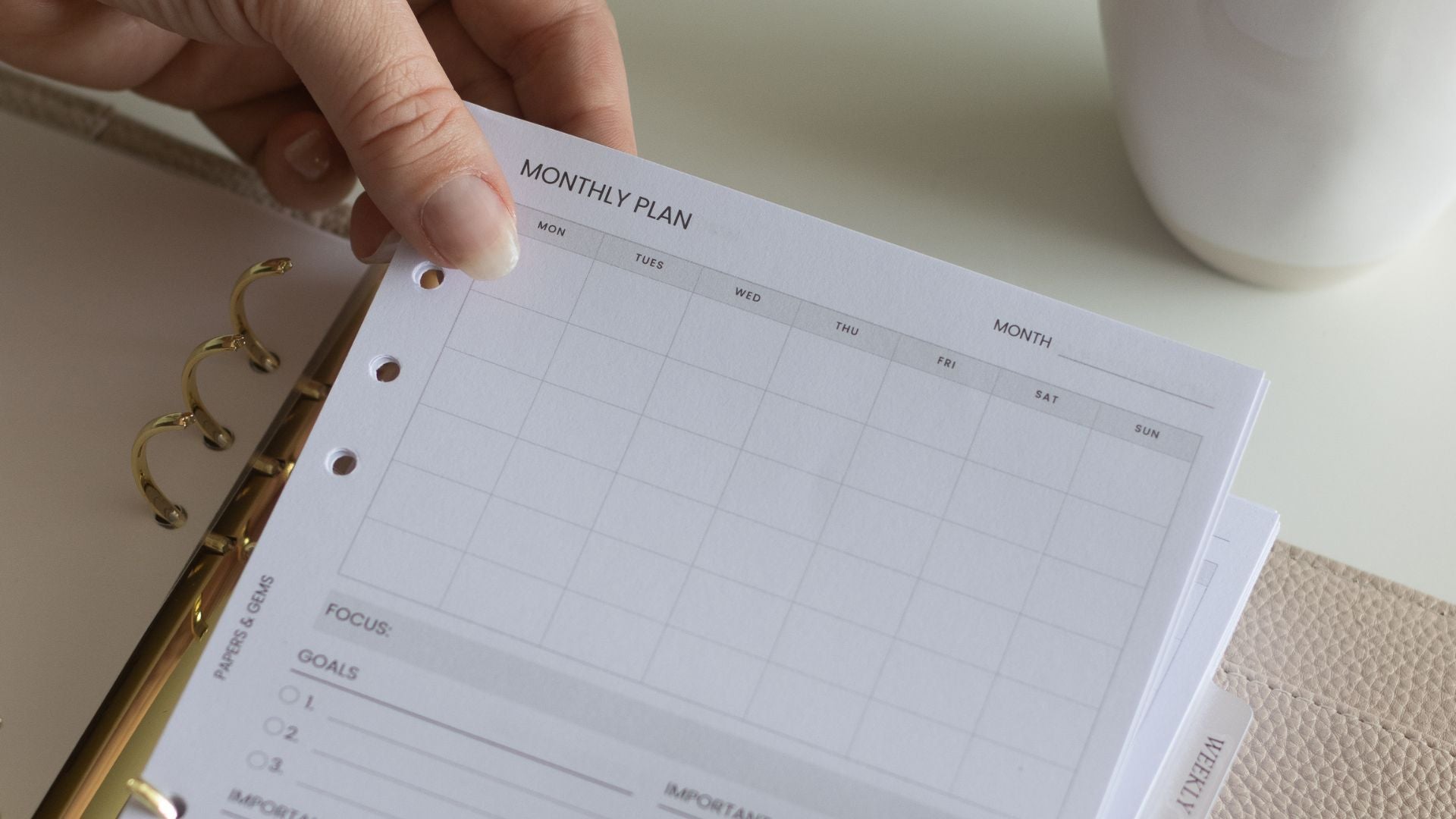
Monthly pages help you define your focus, set three goals, and note important dates.
Weekly pages keep your priorities clear with goals, reminders, and habit tracking.
Daily pages make it actionable with space for priorities, schedules, and gratitude.
It’s more than a planner; it’s a structure that helps you bring calm clarity into your life.
Looking for more on how to refresh your mindset and routines this spring? Read our guide: How to do a Spring Reset for your Life, Goals and Mindset